Answered from New York
The best place to sell jewelry depends on the piece
Gold, diamonds, estate pieces and designer jewelry each sell best in a different place. Compare the options, then ask an independent New York buyer what yours is worth.
- Gold, diamond, estate and designer jewelry
- A written offer you can compare
- Free to ask, never an obligation to sell
- 58.3%Pure gold in 14 karat14 parts of 24 (karat divided by 24)
- 75%Pure gold in 18 karat18 parts of 24
- 31.10 gOne troy ounceThe unit gold is priced in (NIST)
- FreeAsking what a piece is worthAnd no obligation to sell
What you can sell
Each kind of piece has a best place to sell it
Gold is sold by its weight and karat, diamonds by their grades, estate and designer pieces by what they are. Pick the kind of jewelry you have to see how it is valued and who buys it best.
Each kind of piece has a best place to sell it.
Gold jewelry
Chains, bangles, rings and single earrings, valued by karat and weight. Best sold to a buyer who states both and writes the offer down.
Diamond jewelry
Studs, pendants and tennis bracelets. Best sold to a buyer who values the stones, not just the gold; a report helps.
Estate and antique jewelry
Inherited and period pieces. Best sold to someone who resells jewelry as jewelry, after the box is sorted.
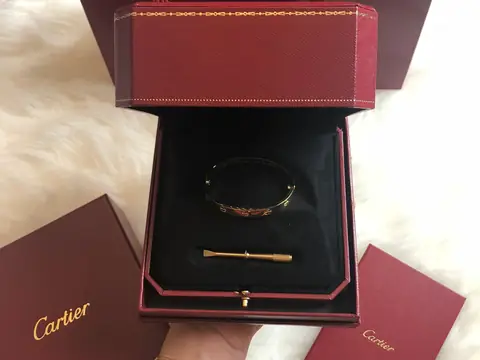
Designer pieces
Signed pieces you own, by makers such as Cartier, Tiffany & Co. or David Yurman. The maker’s mark, the papers and the box all count.
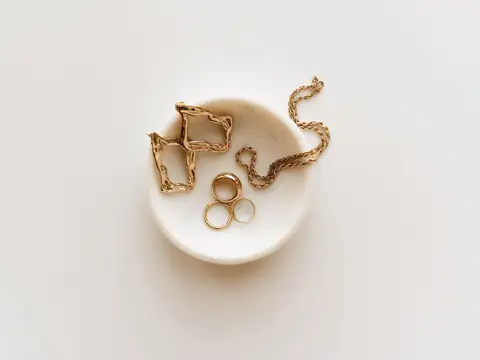
A mix of everything
Most people sell a mix. How to sort it, what an offer is made of, and what paperwork to bring.


Where to sell jewelry
Where to sell jewelry, compared
There is no single best place to sell jewelry. There is a best place for each piece, and it depends on what gives the piece its value: the metal, the stones, the maker or the period. Here are the places people sell, with what each gives you and what to ask before you agree.
| Where you sell | What you get | How the price is set | What to ask first | Often suits |
|---|---|---|---|---|
| Specialist jewelry buyer | A direct offer to buy the piece | By the buyer, after examining the piece and weighing the metal | The troy weight, the karat paid for, and the offer in writing, itemized | Gold of any karat, diamond jewelry, mixed lots |
| Jewelry store | Money, store credit, or no offer, depending on the store | By the store | Whether it buys at all, and whether the offer is money or credit | A trade-in when you are buying anyway |
| Auction house | A sale to bidders, not a purchase by the house | By the bidding, under the house’s terms | The commission and other charges, the estimate, any reserve, and when you are paid | Rare, signed or important pieces |
| Consignment | Payment only if and when the piece sells | The asking price, less the shop’s share | The shop’s share, how long it keeps the piece, and what happens if it does not sell | Wearable designer and vintage pieces |
| Online marketplace | A sale to another person | What a buyer agrees to pay | Who carries the risk in shipping, and what happens if the buyer complains | Pieces you can describe and photograph well |
| Pawnshop | A loan against the piece, not a sale | A loan amount and charges, on the loan’s terms | The full cost to repay, and when you lose the piece if you cannot | Borrowing against a piece you plan to keep |
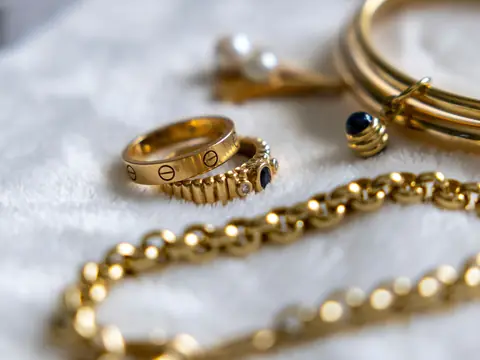
Not sure which place suits your piece? Ask before you sell.
Most people with a box of jewelry use more than one of these: plain gold to a buyer who weighs it, an important piece to auction, the pieces the family wants kept. The guide to jewelry buyers goes through each kind in more depth and explains how to check one before you walk in.
Which place is best for what you have
Plain gold
Chains, bands, bangles and single earrings are valued by their metal, so the best place is a buyer who weighs them on an approved scale, tells you the weight and karat, and puts the offer in writing. Under the FTC’s jewelry guides, the word gold on its own means 24 karat, so the gold share of a piece is its karat divided by 24: 14K is 58.3% gold and 18K is 75%. The page on how to sell gold jewelry explains the weighing and the arithmetic, and broken pieces are covered under scrap gold.
Diamond jewelry
A diamond piece is two things: the metal and the stones. Small stones in a pavé pendant or a tennis bracelet may be valued together by total weight, or not at all; larger stones are examined one by one on the 4Cs that GIA set out in the 1950s: clarity, color, cut and carat weight. A grading report helps for a larger stone. Read where to sell diamond jewelry before you accept an offer based on gold alone.
Estate and antique pieces
An inherited box usually holds plain metal, a few pieces that may be worth more as jewelry, and some unknowns. Sort them before anyone values them, so the best pieces are not sold by weight. The guide to how to sell estate jewelry covers sorting, auction houses and estate paperwork.
Signed designer jewelry
A signed piece can be worth more than its metal to a buyer who resells designer jewelry, and worth only its metal to a buyer who melts. Bring the box, the pouch and the receipt. See the guide to designer jewelry.
Pearls
Pearls have no melt value, so their price is only what a buyer can resell them for, while a clasp marked 14K or 18K has gold value of its own. See where to sell pearls for an honest view.
How any buyer arrives at a number
Every offer for metal starts from the same arithmetic, and knowing it is the best protection you have when you sell jewelry anywhere.
Melt value
Weight in troy ounces x fineness x the spot price per troy ounce. For gold, the fineness is the karat divided by 24. One troy ounce is 31.10348 grams (NIST SP 811), so divide grams by 31.10348.
Melt value is the value of the pure metal only. A buyer’s offer is usually below it, because the buyer pays to refine the metal and needs a margin. The size of that gap is what you are comparing between buyers. Spot prices change through every trading day, so this site prints none: check a live price on the day you sell.
Stones, makers and design sit on top of the metal. A buyer who can resell a piece as jewelry may pay more than melt; one who can only melt it will not. That is why the same ring can bring two very different offers, and why it pays to ask each buyer how they reached their figure.
Two other numbers are not offers. A store receipt shows what was paid at retail, which includes the store’s costs and margin. An insurance appraisal is written for insurance. Both describe the piece; neither is what a buyer will pay. The step-by-step page on how to sell jewelry shows how to use them.
What a well-run buyer does in New York City
New York City’s Department of Consumer and Worker Protection (DCWP) sets out what a business that buys used jewelry and precious metals must do. These rules are the simplest way to tell a well-run buyer from one to avoid:
- Hold a DCWP Secondhand Dealer General licence, post it where customers can see it, and print the number on receipts
- Weigh precious metal on a State-approved scale, read in steps of 0.01 troy ounce or smaller, and tell you the troy weight
- Check your ID and record its type and number; you sign in front of the dealer
- Record each item, its metal and stones and any marks, with the date and time
- Never buy from a minor, and never resell used jewelry within 15 days of buying it
Lending money on pledged goods needs a separate DCWP Pawnbroker licence: a pawn is a loan, not a sale. The page on selling jewelry in NYC has the full list with citations, and the Diamond District on West 47th Street.
Red flags, wherever you sell
- An offer given as one total, with no weight, karat or itemization
- No troy weight stated for your metal
- No licence on the wall in New York City, or no licence number on the receipt
- Pressure to decide now, or an offer that is only good today
- A request to leave pieces behind before any offer is made
- A loan offered when you came to sell
Selling online removes you from the room where your jewelry is examined and weighed. If you go that way, read the questions to ask in the guide to selling jewelry online before you ship anything.
What to bring
- Government-issued photo ID with a signature
- Your pieces, sorted by karat and kind
- Any receipts, appraisals or valuations
- Grading reports for diamonds (GIA or another lab)
- The boxes, pouches and papers a designer piece came with
- A list of the markings stamped inside each piece
How it works
Four steps, and the last one is yours
Here is what to expect when you ask through this site, and what to expect of any reputable buyer.
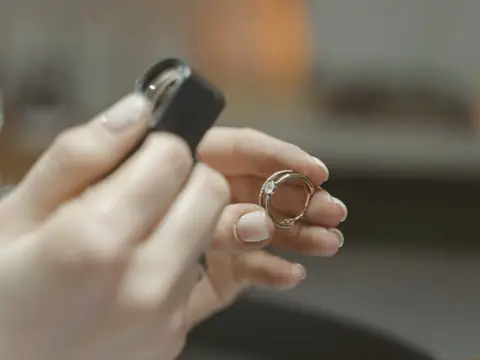
Tell us what it is
Call or send the form with what you have, the markings stamped on it, and any papers. We pass your request to an independent buyer in New York.
A careful look
Expect any reputable buyer to examine the piece and weigh the metal on an approved scale before naming a price.
A written offer
Ask for the offer in writing, itemized by piece or by karat, with the weight it is based on, so you can compare it.
You decide
Asking is free and you never have to sell. Accept the offer, or keep your jewelry and walk away.
From anywhere, answered in New York
New York City and the rest of the US
The line is answered from New York, and the same city rules protect sellers in all five boroughs.
Manhattan
The Diamond District is on West 47th Street between Fifth and Sixth Avenues, according to the 47th Street BID.
Brooklyn
City rules apply in every borough: a buyer of used jewelry needs a DCWP Secondhand Dealer licence.
Queens
A licensed buyer must weigh your gold on an approved scale and tell you its troy weight.
The Bronx
Bring photo ID: a licensed buyer records its type and number, and you sign in front of them.
Staten Island
Under city rules, a buyer cannot resell used jewelry within 15 days of buying it.
Outside New York
Call from anywhere in the US; the line is answered in New York and the guides on this site apply to jewelry anywhere. For a few small gold pieces near home, a local independent jeweler is an honest option to compare against.
Good to know
Questions people ask before they sell
Where is the best place to sell jewelry?
It depends on the piece. Plain gold sells best to a buyer who states its weight and karat; signed and antique pieces to someone who resells jewelry as jewelry; rare pieces may suit an auction house. Wherever you go, ask for a written, itemized offer.
Is Best Place To Sell Jewelry a buyer?
No. It is an independent referral service, not a buyer, pawnshop or dealer. When you call or send the form, we pass your request to an independent buyer in New York, who makes any offer. You never have to sell.
Who pays the most for jewelry?
No one kind of buyer pays the most for everything. A buyer who can resell a piece as jewelry may pay more than one who can only melt it, so match the buyer to the piece and compare written offers.
Is it better to sell jewelry to a jeweler or a pawnshop?
They do different things. A pawn is a loan against an item you get back by repaying it; a jeweler or specialist buyer buys it outright. In New York City, lending money on pledged goods needs a separate DCWP Pawnbroker licence. If you want to sell, go to a buyer.
How can I sell my jewelry for the most money?
Know the metal value before you go, separate pieces with stones or makers’ names from plain gold, bring any papers, and compare written offers part by part.
Why does this site show no gold prices?
Metal prices change through every trading day. Use the melt formula with a live spot price on the day you sell.
What do I need to bring?
Government-issued photo ID with a signature. In New York City, a licensed buyer records it and you sign in front of the dealer. Receipts, appraisals and grading reports help too.
Can I ask from outside New York?
Yes. You can call from anywhere in the US; the line is answered from New York.

Not sure what you have? Describe it and ask.
Ask what it is worthThe best place to sell is the one that shows how it reached its number.
Call, or send the form, and we connect you with an independent New York buyer. Asking is free and you never have to sell.