Diamond jewelry is two things at once: a piece of metal, usually gold or platinum, and one or more diamonds set in it. When you sell, those two parts are valued in different ways, and the right place to sell depends on which part carries the value. A pair of studs with half-carat stones and a tennis bracelet with dozens of tiny diamonds can look similar in a jewelry box and sell in completely different ways.
This page explains where to sell diamond jewelry and diamonds: how buyers look at small and large stones, what the 4Cs are, why a grading report matters for a larger diamond, how lab-grown stones are described, and how to compare offers. Engagement rings are a topic of their own; this page covers earrings, pendants, necklaces, bracelets and other diamond jewelry.
Best Place To Sell Jewelry is an independent referral service, not a buyer, pawnshop or dealer. When you call or send the form, we pass your request to an independent buyer in New York, who makes any offer, and you can always decline.
Have diamond jewelry to sell? Call and describe the stones and the setting, or use the form on this page.
What a diamond is, in the eyes of the law
The FTC’s jewelry guides (16 CFR 23.12) define a diamond as “a mineral consisting essentially of pure carbon crystallized in the isometric system”, with a hardness of 10, a specific gravity of about 3.52 and a refractive index of 2.42.
The same guides set out how weight is described: a carat is 200 milligrams, one fifth of a gram, and a point is one hundredth of a carat, so “25 points” means a quarter carat (16 CFR 23.18). GIA’s 4Cs site gives the same definition: “A metric Carat is defined as 200 milligrams.”

The 4Cs, in brief
According to GIA, “Diamond professionals use the grading system developed by GIA in the 1950s, which established the use of four important factors to describe and classify diamonds: Clarity, Color, Cut, and Carat Weight.” These are the 4Cs, the common language for describing a diamond.
- Carat weight. The weight of the stone, in carats and points.
- Color. GIA grades color against masterstones on its D-to-Z scale.
- Clarity. The presence of inclusions and blemishes. In GIA’s clarity system, Flawless is the top grade: no inclusions or blemishes visible under 10x magnification to a skilled grader.
- Cut. How well the stone is proportioned and finished. Under the FTC guides, “brilliant” or “full cut” without qualification is for a round diamond with at least 32 facets plus the table above the girdle and at least 24 below.
Small stones and large stones are looked at differently
One useful thing to know about selling diamond jewelry is that stone size can change how a piece is looked at.
Small diamonds and pavé
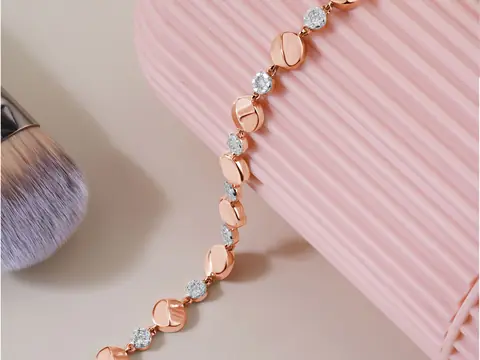
Tennis bracelets, eternity bands, pavé pendants and cluster earrings hold many small diamonds. If the stones have no reports of their own, ask a buyer how they valued them: by total carat weight, by overall quality, or not at all. A receipt or appraisal that states the total carat weight gives you something to check against. Ask too whether the offer counts the stones as part of the piece or simply deducts them from the metal weight.
Larger single stones
A pair of studs, a solitaire pendant or a bracelet with a few larger diamonds is a different matter. Expect each larger stone to be examined on its own against the 4Cs, and ask for the grades the buyer used. This is where a grading report is most useful.
| Piece | What to ask about | What helps the sale |
|---|---|---|
| Tennis bracelet, eternity band | How the total diamond weight and the metal were each valued | A receipt or appraisal that states the total weight |
| Pavé or cluster pendant | Whether the small stones were valued or deducted as weight | Karat stamp, metal weight |
| Diamond studs | The grades used for each of the two stones | A grading report for each stone |
| Solitaire pendant or necklace | The grades used for the center stone | A grading report, the original receipt |
| Diamond earrings with several stones | How the total weight and quality of the stones were judged | The receipt, any appraisal |
Grading reports: why they matter
A grading report from a laboratory describes a diamond’s 4Cs and measurements independently of the person selling it. GIA, which developed the 4Cs system, issues reports, and IGI is another laboratory that issues diamond reports. A buyer can still examine a stone without a report, but a report lets them confirm it faster and gives both of you the same description to discuss.
GIA offers a Report Check on its website where a report number can be looked up. If your diamond has a report, bring the original document. If a larger stone has no report, ask a buyer whether it is worth getting one before you sell. For small stones, a report may cost more than it could add.
An appraisal is not a report, and neither is an offer
An insurance appraisal is written for insurance. A grading report describes the stone. An offer is what a buyer will pay. All three are useful, and they are three different numbers.
Lab-grown diamonds
Under the FTC’s jewelry guides, a lab-grown diamond should be clearly described as laboratory-grown (or similar): it was made in a laboratory rather than mined. The guides say a stone described with a word like “cultured” should carry a clear disclosure such as “laboratory-created”, “laboratory-grown” or “[manufacturer name]-created”.
If you bought a piece described as lab-grown, tell the buyer. If you are not sure, bring any report and ask the buyer how they will tell. Saying up front that a stone is lab-grown means the offer is made on the right basis.

Where to sell diamond jewelry
- A specialist diamond and jewelry buyer. Makes a direct offer after examining the stones and the metal. In New York, the 47th Street BID describes the Diamond District, on West 47th Street between Fifth and Sixth Avenues, as the place with “the largest concentration of diamond and jewelry related companies and retailers”.
- A retail jeweler. May buy, may offer a trade-in toward a new purchase, or may not buy at all. Ask whether an offer is cash or credit.
- An auction house. For important stones or signed pieces, where bidding may beat a direct offer. Ask for the commission, other charges and payment date in writing.
- Consignment and online marketplaces. Possible for wearable pieces, but you carry the risk of shipping and the wait for a buyer. The sell jewelry online guide covers what to ask.
- A pawnshop. Lends money against the piece; it is a loan, not a sale.
Where diamond jewelry is also signed by a maker, see designer jewelry. For inherited diamond pieces, see estate jewelry. For a broad look at the kinds of jewelry buyers and how to check one, see that page.
How to prepare diamond jewelry for sale
- Find any grading reports, receipts and appraisals, and match each to its piece.
- Note the karat stamp on each piece and any total diamond weight a receipt or appraisal gives.
- Clean the pieces gently so the stones can be seen, without harsh chemicals on settings you are unsure of.
- Photograph each piece, including close-ups of the stones.
- Bring photo ID. In New York City, a licensed buyer records it and you sign in front of the dealer.
- Ask for a written offer that separates the value of the stones from the value of the metal.
Comparing offers on diamond jewelry
Ask each buyer how they arrived at their figure: what they graded the main stones as, what total weight they used for small stones, and what they paid for the metal. If two offers differ widely, the difference may lie in how the stones were graded, so ask each buyer for their grades. A buyer who quotes a figure without having examined the stones or checked the report is guessing.
In New York City, a business that buys used jewelry must hold a DCWP Secondhand Dealer General licence, posted where you can see it, and must record each piece bought with its metal and stones. Used jewelry cannot be resold within 15 days of purchase.
Ready to compare? Call, and we connect you with an independent New York buyer.
Taxes
A profit on selling diamond jewelry may be taxable. The IRS says net capital gains from selling collectibles, such as coins or art, are taxed at a maximum federal rate of 28% (IRS Topic No. 409). Whether that applies to a jewelry sale, and what you owe, is a question for a tax professional.
Questions people ask
Where is the best place to sell diamonds and gold?
A buyer who examines the stones, weighs the metal on an approved scale, tells you the weight and writes the offer down. For important stones or signed pieces, an auction house is worth asking too.
How much is a 1 carat diamond worth to sell?
There is no single figure: two one-carat diamonds can differ widely in value depending on their color, clarity and cut. A grading report and a written offer from a buyer who has examined the stone are the only reliable answer.
Should I get a GIA report before selling diamond earrings?
For larger stones, a report can help a buyer confirm the grade and supports your side of the conversation. For small stones it may cost more than it adds. Ask a buyer before you spend the money.
Is it better to pawn or sell diamonds?
Pawning is a loan against the piece, which you repay to get it back. Selling is final. If you do not intend to buy the piece back, a sale is the simpler choice.
Can I sell a diamond tennis bracelet?
Yes. A buyer will look at the total diamond weight, the quality of the stones and the metal. Bring the receipt or an appraisal if you have one, especially if it states the total diamond weight.
Ask about a piece