Pearls are the piece of jewelry people most often inherit and least often know how to sell. A strand of pearls looks valuable, and it may have been expensive, but pearls are not metal: there is no melt value to set a floor under the price. What a pearl necklace is worth to a buyer depends on what they can resell it for as jewelry, and that varies widely from strand to strand.
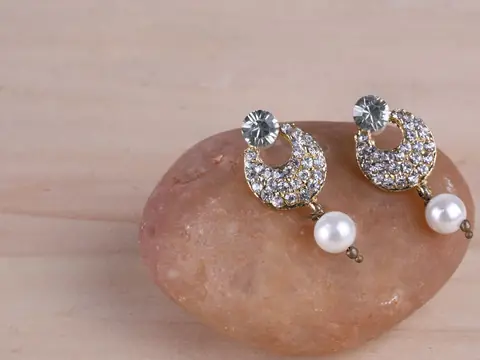
This page is an honest guide to where to sell pearls, what a buyer looks at, and why the clasp sometimes matters as much as the pearls.
Best Place To Sell Jewelry is an independent referral service, not a buyer, pawnshop or dealer. When you call or send the form, we pass your request to an independent buyer in New York, who makes any offer, and you can always say no.
Have a pearl necklace or pearl jewelry to sell? Call and describe it, including any marks on the clasp.
Why pearls are different from gold
Gold, silver and platinum have a metal value that anyone can work out from weight, fineness and the day’s spot price. Pearls have no equivalent. A pearl cannot be melted and refined into anything, so its value is only what someone will pay for it as a pearl. That is why two pearl necklaces that look alike can bring very different offers, and why some sell for less than their owners expect.

Start with the clasp
Look closely at the clasp and any metal findings. A clasp marked 14K or 18K is solid gold with its own metal value: under the FTC’s jewelry guides (16 CFR Part 23), gold alloy should carry its karat, and the gold share is the karat divided by 24, so 14K is 58.3% gold and 18K is 75%. A clasp marked 925 or sterling is at least 92.5% silver. Some clasps also carry small diamonds or other stones.
On some strands, the gold in the clasp is a meaningful part of what the piece will bring. Know what the clasp is before you hear an offer.
What a buyer looks at in the pearls
Expect a buyer to examine the pearls themselves, not just the strand. Expect questions or checks on:
- Whether the pearls are genuine or imitation
- Their size and how evenly matched they are along the strand
- Their surface: blemishes, wear and peeling
- Their luster and color
- The condition of the stringing and knots
- The clasp, its metal and any stones
A strand that needs restringing is not ruined, though a buyer may take the cost into account.
Papers and provenance help
If you have the original receipt, an appraisal, or a box from the store where the pearls were bought, bring them. They help a buyer understand what the pearls are. Keep in mind that an insurance appraisal is written for insurance; it is not an offer.

Where to sell pearls
- A jewelry buyer who resells pearl jewelry. Examines the pearls and the clasp and makes a direct offer for the piece.
- An estate jewelry buyer. A natural fit when the pearls are part of an inherited collection. See the guide to estate jewelry.
- An auction house. For important or signed pearl jewelry, where bidding may matter. Ask for the terms in writing.
- Consignment. A shop displays the strand and pays you when it sells, if it sells.
- A buyer of metal only. May pay for a gold clasp and nothing for the pearls. Useful to know as the floor.
If a pearl piece is signed by a maker, read the guide to designer jewelry as well. For a wider look at the kinds of jewelry buyers, see that page.
An honest expectation
Pearl jewelry can be beautiful and still bring a modest offer, because there is no metal floor under the pearls. If an offer seems low, ask what part of it is for the clasp and what part for the pearls, and get a second opinion before you decide.
Pearls in mixed jewelry
Pearl earrings, pendants and rings are usually set in gold or silver. Expect a buyer to look at the pearl and the metal separately, much as they would a stone in a gold setting. If the metal is the main value, the page on how to sell gold jewelry explains the weighing and the arithmetic.
In New York City
A business that buys used jewelry in New York City must hold a DCWP Secondhand Dealer General licence, check your ID, and record each piece it buys with a description of its metal and stones. Precious metal must be weighed on a State-approved scale with the troy weight told to you, which applies to a gold clasp too. The selling jewelry in NYC page has the details.
Want an honest view of a pearl strand? Call, and we connect you with an independent New York buyer.
Questions people ask
Where can I sell a pearl necklace?
To a jewelry or estate buyer who resells pearl jewelry, through consignment, or at auction for important pieces. A buyer of metal only may pay just for a gold clasp.
Are old pearls worth anything?
They can be, depending on whether they are genuine, their size, matching, surface and luster, and the clasp. A buyer has to see them to say.
Is a pearl necklace clasp worth anything?
If it is marked 14K or 18K, it is solid gold and has metal value of its own. A sterling clasp has silver value.
Should I restring pearls before selling?
Ask a buyer first. A buyer can judge the pearls on their old string, and may factor in the cost of restringing.
Ask about a piece