Estate jewelry is simply jewelry that has been owned before, very often by someone who has died, and it usually arrives as a box rather than a single piece: rings, brooches, cufflinks set aside for a grandchild, a string of beads, a few gold chains knotted together, and one or two pieces nobody in the family can identify. Selling it well means not treating the whole box the same way.
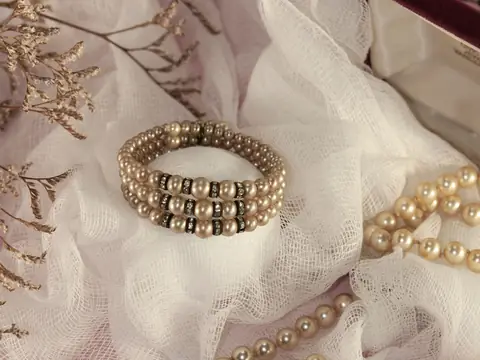
This page explains how to sell estate jewelry: how to sort an inherited collection, why some antique and vintage pieces are worth more than their metal, what estate jewelry buyers look for, when an auction house is worth the wait, and the paperwork that helps. If the box turns out to be mostly plain gold, the page on how to sell gold jewelry covers karat and weight.
Best Place To Sell Jewelry is an independent referral service, not a buyer, pawnshop or dealer. When you call or send the form, we pass your request to an independent buyer in New York, who makes any offer. Asking is free, and you never have to sell.
Settling an estate with jewelry in it? Call and describe the collection, or send the form on this page.
First, slow down
One easy way to undersell estate jewelry is speed: the whole box goes to the first buyer for one figure. Before anyone values it, take three steps.
- Confirm you can sell it. If the jewelry is part of an estate still being settled, check with the executor or the estate’s lawyer before anything leaves the family.
- Photograph every piece front and back, with the marks visible, and number each one on a list.
- Ask the family. Someone may know where a piece was bought, who made it, or whether it was ever appraised. A name or a date can change how a buyer sees a piece.

Sort the collection into three piles
Plain metal
Gold chains, plain bands, single earrings, broken pieces and anything damaged beyond repair. These are valued by metal: the karat share (karat divided by 24, so 14K is 58.3% gold and 18K is 75%) times the weight in troy ounces times the day’s spot price, less the buyer’s margin. Plain metal is the easiest part of an estate to price, and it is a fair place to start comparing buyers.
Pieces that may be worth more than their metal
Look for:
- Maker’s marks and signatures. A maker’s name or mark beside the karat stamp, on a clasp, or on the back of a brooch. Signed pieces are covered on the page for designer jewelry.
- Period design. Distinct styles of a particular era, handwork such as engraving or filigree, and unusual settings.
- Older stones. Diamonds and colored stones cut in older styles, which may be judged differently from modern stones.
- Condition. Original, unrepaired pieces with their stones intact.
- Boxes and papers. Original fitted boxes and receipts help a buyer confirm what a piece is.
These pieces may be worth more as jewelry because a buyer can resell them as jewelry. That is the whole reason to separate them: a buyer who melts pays only for the metal, while a buyer who resells jewelry, or bidders at auction, may pay for the piece.
Costume and unknowns
Unmarked pieces, plated pieces and anything that tests as base metal. Some vintage costume jewelry may interest collectors, but it is not valued as fine jewelry. Keep unknowns aside and ask a buyer to identify them rather than throwing them out.
Antique, vintage and estate: what the words mean
“Estate jewelry” means previously owned. “Antique” and “vintage” describe age, with antique the older of the two; dealers draw the lines between them differently, so the words alone tell you little about value. What a buyer cares about is not the label but the piece: who made it, how it was made, what it is set with, and what condition it is in.
So whether you want to sell antique jewelry, sell vintage jewelry or simply find estate jewelry buyers for a relative’s collection, the question is the same: is this piece worth more as jewelry than as metal, and who can tell you?
What estate jewelry buyers look for
A buyer who resells pieces as jewelry has reason to examine a piece the way a future customer would. Expect a careful buyer to look at:
- The metal and its marks, tested where a mark is worn
- The maker’s mark, if any, and whether the piece is consistent with that maker
- The stones: what they are, their condition, and whether any are replacements
- Repairs, solder marks, resizing and worn engravings
- Whether a piece is complete: missing stones, a lost pin back, a broken clasp
Expect the metal to be weighed too, because the metal value is the floor under any piece: even a period brooch is worth at least its gold.
When an auction house makes sense
At auction, pieces are offered to bidders rather than bought by the house, and you are paid after the sale, on the house’s terms. For a rare signed piece, an important stone or a collection with a story, competitive bidding may beat a direct offer. For plain gold and everyday pieces, the wait and the fees may not be worth it.
If you approach an auction house, ask for its terms in writing: the seller’s commission, any charges for photography, insurance or unsold lots, the estimate it will publish, any reserve price, and when you will be paid. Compare that with a direct written offer for the same pieces.
A direct offer and an auction can work together
An estate can sell plain gold directly, send one or two important pieces to auction, and keep the pieces the family wants. There is no rule that a collection must go to one place.

Diamonds in estate jewelry
Older diamond jewelry may come with no paperwork at all. A buyer can examine and measure a stone in its setting, but a grading report from a laboratory such as GIA or IGI gives a fuller description. GIA, which developed the 4Cs grading system in the 1950s, grades color on its D-to-Z scale and clarity up to Flawless. For a larger stone, a report can be worth getting before you sell. The page on where to sell diamond jewelry explains why.
Note too: under the FTC’s jewelry guides, a lab-grown diamond should be clearly described as laboratory-grown (or similar): it was made in a laboratory rather than mined. If a collection includes newer pieces, ask how each stone was identified.
Appraisals in an estate
An estate may already have an appraisal, done for probate or for insurance. Bring it. Keep in mind that an insurance appraisal is written for insurance and is not an offer. An appraisal is most useful to a seller as a description of what each piece is.
Selling estate jewelry in New York City
In New York City, a business that buys used jewelry must hold a DCWP Secondhand Dealer General licence, weigh precious metal on a State-approved scale and tell you the troy weight, record each piece with its metal and stones, and check the seller’s ID. The person selling signs in front of the dealer, so if you are selling for the estate, be ready to show your own ID. Used jewelry cannot be resold within 15 days of purchase. The selling jewelry in NYC page has the full list.
Want an estate collection looked at piece by piece? Call, and we connect you with an independent New York buyer.
Taxes on inherited jewelry
Selling inherited jewelry can have tax consequences. The IRS says net capital gains from selling collectibles, such as coins or art, are taxed at a maximum federal rate of 28% (IRS Topic No. 409). How that applies to an inherited piece depends on the estate and on you, so ask a tax professional before you sell.
A checklist for selling estate jewelry
- Check with the executor that the jewelry can be sold
- Photograph and number every piece
- Separate plain metal, possible jewelry value and unknowns
- Find any receipts, appraisals, reports, boxes and family notes
- Get a direct written offer, itemized by piece
- For important pieces, ask an auction house for its terms in writing
- Compare, and sell each group where it does best
Questions people ask
What defines estate jewelry?
Estate jewelry is jewelry that has been owned before, often from the estate of someone who has died. The term says nothing about age or value on its own; antique and vintage pieces are estate jewelry, and so is a gold chain bought ten years ago.
How do I sell inherited jewelry?
Confirm the jewelry can be sold, photograph and list every piece, separate plain metal from pieces that may be worth more as jewelry, gather any paperwork, and get an itemized written offer. Consider an auction house only for rare or important pieces.
Is estate jewelry worth more than its gold?
Some is. Signed pieces, period designs and pieces with fine older stones may be worth more as jewelry than as metal. Plain and broken pieces are usually valued by metal.
Should I get estate jewelry appraised before selling?
An appraisal helps you understand what each piece is, and a grading report helps for larger diamonds. Treat an insurance appraisal as a description, not as an offer.
What does an auction house charge to sell jewelry?
Each house sets its own terms, which can include a seller’s commission and other charges. Ask for the terms in writing and compare them with a direct offer.
Ask about a piece